
Trisakti Institute of Tourism Library
Trisakti Institute of Tourism Library
In 1865, British polymath Francis Galton published his initial thoughts about the scientific field that would become ‘eugenics.’ The same year, Russian physician Vasilii Florinskii addressed similar issues in a sizeable treatise, entitled Human Perfection and Degeneration. Initially unheralded, Florinskii’s book would go on to have a remarkable afterlife in twentieth- and twenty-first-cen…
In a time when conservative politicians challenge the irrefutability of scientific findings such as climate change, it is more important than ever to understand the conflict at the heart of the “religion vs. science” debates unfolding in the public sphere. In this groundbreaking work, John H. Evans reveals that, with a few limited exceptions, even the most conservative religious Americans a…
Infectious diseases are associated with approximately 20% of global mortality, with viral diseases causing about one third of these deaths. Besides newly emerging and re-emerging viral infections will continue to pose a threat to human survival globally. In this case scientific advances have greatly been increased to defend against those pathogens. For example, rapid genomic sequencing, proteom…

Borders have been drawn since the beginning of time, but in recent years artificial barriers have become increasingly significant to the political conversation across the world. Donald Trump was elected President of the United States while promising to build a wall on the Mexico border, and in Europe, the international movements of migrants and refugees have sparked fierce discussion about whet…

The 2014 Referendum on Scottish independence sparked debate on every dimension of modern statehood. Levels of public interest and engagement were unprecedented, as demonstrated by record-breaking voter turnout. Yet aside from Trident, the issue of security was relatively neglected in the campaigns, and there remains a lack of literature on the topic. In this volume Andrew Neal has collated a va…

In view of the challenges—many of which are political—that different European countries are currently facing, scholars who work on the eighteenth century have compiled this anthology which includes earlier recognitions of common values and past considerations of questions which often remain pertinent nowadays. During the Enlightenment, many men and women of letters envisaged the continent 
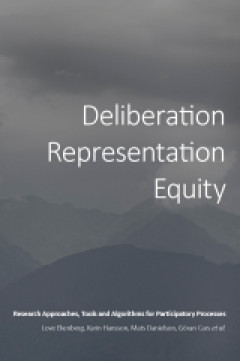
What can we learn about the development of public interaction in e-democracy from a drama delivered by mobile headphones to an audience standing around a shopping center in a Stockholm suburb? In democratic societies there is widespread acknowledgment of the need to incorporate citizens’ input in decision-making processes in more or less structured ways. But participatory decision making is …

Read Agner Fog's introductory post on our blog [...] it presents a valuable overview of the extensive literature on the societal correlates of modern warfare and makes a convincing, and timely, case for the deceptive use of the threat of war by populists or budding dictators. — Carel P. van Schaik, University of Zurich, Adaptive Behaviour (May 2018) https://doi.org/10.1177/105971231877197…
 Karya Umum
  Filsafat
  Agama
Agama  Ilmu-ilmu Sosial
  Bahasa
  Ilmu-ilmu Murni
  Ilmu-ilmu Terapan
  Kesenian, Hiburan, dan Olahraga
  Kesusastraan
  Geografi dan Sejarah